

In the “Always #LikeAGirl- Unstoppable”, gender is being heavily played up. This campaign was published to the social media platform, YouTube, in 2015 and as of today, has over 39 million views. This campaign started with another video similar to this one, that focused on girls and the stereotypes associated with the female gender. In this first video, the girls were able to overcome the stereotypes of doing something “like a girl” and encouraged other girls to do the same. If you have no idea what I am talking about, watch both videos for yourself…
As a girl myself, the first time I watched these videos, I was inspired and felt like I could relate to the young girls in the video. Not only were they speaking to the expectations of being a girl but also the limitations of being one. But when we look closer, is this message a good one to pass on? Here are just a few reasons why this video is contributing to the social construction of gender.
What is Gender Social Construction?
The concept of gender itself is a social construction. For example, take a look at both of these diagrams and try to decipher which gender is being presented.


Dot Esports / The Lobby Observer/ Target


Solid Color Backgrounds/ Kelley Blue Book/ ScreenAnarchy
If it wasn’t obvious to you, the first row of photos would represent the gender of female and the second row would represent the male. These expectations and performative qualities of gender were created through the societal idea of what a boy should like versus what a girl would like.
Girls are Weak
https://giphy.com/embed/XZaR2z4VXgCLpDxwp5
via GIPHY
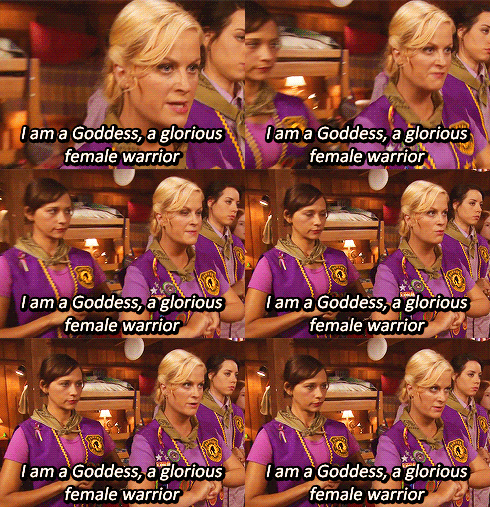
One of my personal pet peeves is when the female gender is presented as weak or incapable. There were far too many waves of feminism for our society to still consider girls and women weak or lesser than men. In these videos, the main idea is to have these girls overcome what they feel is holding them back, but by doing this, they perform a very sad and frankly inaccurate, position of being weak as a part of being a girl.
https://giphy.com/embed/bKwbkn80jUbss
via GIPHY
The issue with this performing to fit social construction is that there is no physical or logical reason why a girl is weaker than a boy. The only reason why society understands girls to be weaker is that we have always been told this through media.
Why We Understand Girls to Be Weak

University of Malta

Daily Mail

Newshub
From as early as the 1920s until now, women have traditionally been presented as helpless or in need of saving in media. The photos above are just a few of many examples of how women are presented in the media. Whether you are a little girl watching a Disney movie or a grown woman buying ketchup, you are reminded who is the more important and more capable gender (hint: it isn’t the girl).
Power & Gender
https://giphy.com/embed/3o85xKPAEDCuXxRepO
via GIPHY
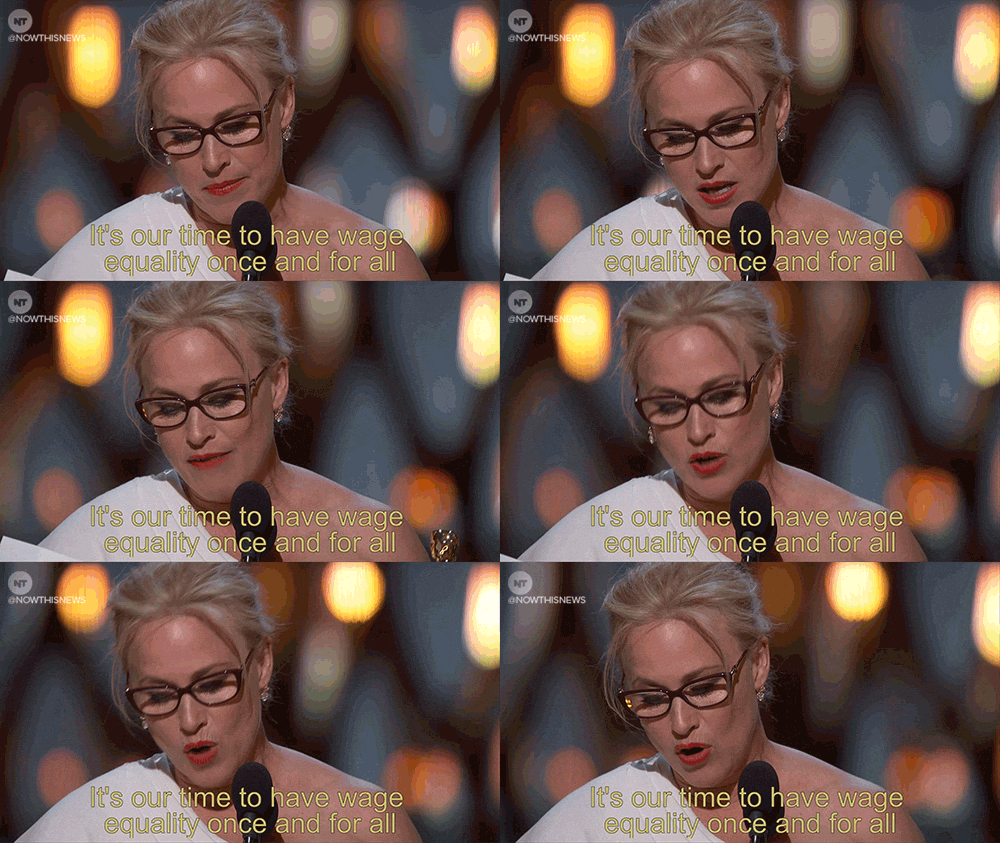
What we know is created and constructed through media. Another social construction that has been related to gender is power. What we know and how we perceive things is constructed. Foucault touches on this idea. The construction of who has power and who does not is no mistake. Patriarchy has carefully constructed a discourse in order to remind us that men are the superior sex. This also relates to gender equality and how traditionally women have not been treated equally in the workplace and in general. By giving women less power, men are able to stay on top and the more dominant sex.
https://giphy.com/embed/kNLpTR3WMnLJm
via GIPHY
So what does this all have to do with #LikeAGirl? The concept of this video is meant to inspire young girls not to fall into the ideology and stereotypes of being a girl. But why not remove the narrative as a whole and just show young girls that there is nothing stopping them from being more than the social construction of a girl? If we all just treated each other equally, no matter the gender you identify with, we would see a change in our society. Regardless of one’s gender, you should be able to accomplish anything that you set your mind to. Not be held back by this not-even-tangible ideology that says you can’t.






 Brianna Hayley